
'That is the one headline the world is reading about India this week, and it is a potentially damaging story...' 'I don't think a panic mentality has set in, but this story is one that investors and market watchers are absolutely seized with.'

The interplay between domestic and foreign capital will shape India's equity markets.

India on Monday imposed a 12 per cent provisional safeguard duty for 200 days on five steel product categories, including hot rolled coils, sheets and plates, to protect domestic players from surge in imports. The decision follows a recommendation for the same by the Commerce Ministry's investigation arm DGTR. Last month, the DGTR suggested to impose the duty.

The most striking features of this Budget was its focus on simplification and improving the ease of doing business in India, asserts Kaku Nakhate.

India will need to grow at an average 7.8 per cent to become a high-income country by 2047, a World Bank report said on Friday. To achieve this goal India would require reforms in financial sector as well as in land and labour market, the World Bank said in its India Country Memorandum titled 'Becoming a High-Income Economy in a generation'.
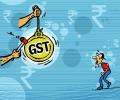
The GST intelligence unit detected tax evasion of more than Rs 1.98 lakh crore last year and arrested 140 masterminds who were involved in defrauding the exchequer, the finance ministry said on Thursday. In 2023, the Directorate General of GST Intelligence (DGGI) detected significant GST evasion in diverse sectors like online gaming, casinos, insurance and secondment (import of manpower services). "DGGI has achieved an increase in detection of cases of evasion and voluntary payments. In 2023, DGGI detected 6,323 cases involving evasion of duty of Rs 1,98,324 crore with a voluntary payment of Rs 28,362 crore.

Mumbai International Airport (MIAL) has proposed a significant increase in User Development Fee (UDF) for international passengers, while domestic passengers will be charged a UDF for the first time. However, MIAL also proposed a 35% reduction in landing and parking charges, aiming to balance infrastructure development with cost-effective air travel for airlines. The new tariff structure is subject to approval by the Airport Economic Regulatory Authority (AERA).

The escalation of conflict in the West Asian region is expected to push already high logistics costs besides hurting trade in sectors such as oil, electronics and agriculture, according to exporters. They said that insurance costs for exports to the countries directly involved in the war could also go up, which will impact Indian exporters' working capital. Think tank Global Trade Research Initiative (GTRI) stated that the conflict is already hurting India's trade with countries like Israel, Jordan, and Lebanon.

The government Rs 20 lakh crore package includes Rs 1.7 lakh crore of fiscal stimulus announced in the first phase, Rs 5.6 lakh crore stimulus provided through various monetary policy measures and Rs 5.94 lakh crore through the second phase, implying Rs 6.70 lakh crore package is still to be announced.

The Reserve Bank on Friday raised the inflation projection for current fiscal year to 4.8 per cent from 4.5 per cent with Governor Shaktikanta Das saying lingering food price pressures are likely to keep headline inflation elevated in the December quarter. Consumer price index (CPI)-based inflation increased sharply in September and October 2024 led by an unanticipated increase in food prices.

The RBI under former governor Shaktikanta Das resisted pressures to cut interest rates through 2024 as it kept its 'Arjuna's eye' trained on inflation, but the central bank under a new detail-oriented head will soon have to take a call if it can continue sacrificing growth. Das, a career bureaucrat who in 2016 oversaw Prime Minister Narendra Modi's highly disruptive demonetisation move, left a lasting legacy as he demitted office towards the end of 2024 after expertly navigating monetary policy for six years, the highlight of which was steering India's recovery through the pandemic.

Automobile dispatches from companies to dealers rose 12 per cent last year compared to 2023 on the back of positive consumer sentiments which aided robust demand for two-wheelers, industry body SIAM said on Tuesday. Total wholesales across categories rose to 2,54,98,763 units in 2024 against 228,39,130 units in 2023, a growth of 11.6 per cent.

The central government is likely to further consolidate its fiscal deficit by 50 basis points (bps) to 5.9 per cent in FY24 from 6.4 per cent in FY23, according to a recent report released by Goldman Sachs on Tuesday. In the current fiscal year, there is going to be an upside of 0.5 per cent on the receipts side due to higher nominal GDP growth, and higher tax buoyancy because of the formalisation, the report said. The upside to expenditure is mainly going to come from incremental subsidies (0.8 per cent of GDP), in both food and fertilizer, it said. The upcoming pre-election Budget will carry forward the trend of the increased capital expenditure seen in recent years.

'The intensity and frequency of heatwaves will be much higher than in previous years over Punjab, Haryana, Rajasthan, Gujarat, Madhya Pradesh and Odisha.'

Despite several constraints, the policy has tried to support growth through more liquidity infusion.

'The RBI's MPC will maintain the current policy rates (6.50%) at the policy meeting, given ongoing inflationary pressures.'

'...he keeps his campaign promises, does what he said he will do which led to his huge victory.'

10 largecaps stocks which stand to gain from the Budget.

'For the past number of weeks, you and I have found ourselves at odds about the best path forward for Canada'

S&P Global Ratings on Wednesday upgraded India's sovereign rating outlook to positive from stable while retaining the rating at 'BBB-' on robust growth and improved quality of government expenditure. S&P said it could upgrade India's sovereign rating in the next 2 years if the country adopts a cautious fiscal and monetary policy that diminishes the government's elevated debt and interest burden while bolstering economic resilience.

'There are deeper, underlying, forces at work and we need institutional arrangements to guard against them.'

The bad assets or gross NPAs of commercial banks fell to a 12-year low of 2.8 per cent in March 2024 and may go down further to 2.5 per cent by the end of the current fiscal, said the RBI's Financial Stability Report (FSR) released on Thursday. Scheduled Commercial Banks' (SCBs) gross non-performing assets (GNPA) ratio fell to 2.8 per cent, and the net non-performing assets (NNPA) ratio to 0.6 per cent at the end of March 2024. "The asset quality of SCBs recorded sustained improvement, and their GNPA ratio moderated to a 12-year low in March 2024. Their NNPA ratio too improved to a record low," said the June FSR.

The finance minister, in her Budget speech, should focus more on what she is directly responsible for, rather than on programmes where her role is largely supportive, notes Nitin Desai.
Since end-May there has been volatility in the foreign exchange market.

The Reserve Bank in its Mid-Term Review of Annual Policy Statement for 2008-09, the Reserve Bank has said that inflation continues to be a matter of concern.
The central government is on track to meet its fiscal deficit target of 6.4 per cent of the GDP for 2022-23 on the back of strong growth in revenue collections, the World Bank said in its India Development Update on Tuesday. High nominal GDP growth in the first quarter supported strong growth in revenue collection, especially Goods and Services Tax (GST), despite tax cuts on fuel. Notwithstanding an increase in spending due to expanded fertilizer subsidies and food subsidies for vulnerable households in response to the commodity price shock, the government is on track to meet its FY22/23 fiscal deficit target of 6.4 per cent of GDP and the general government deficit is projected to decline to 9.6 per cent from 10.3 per cent in FY21/22 and 13.3 per cent in FY20/21.
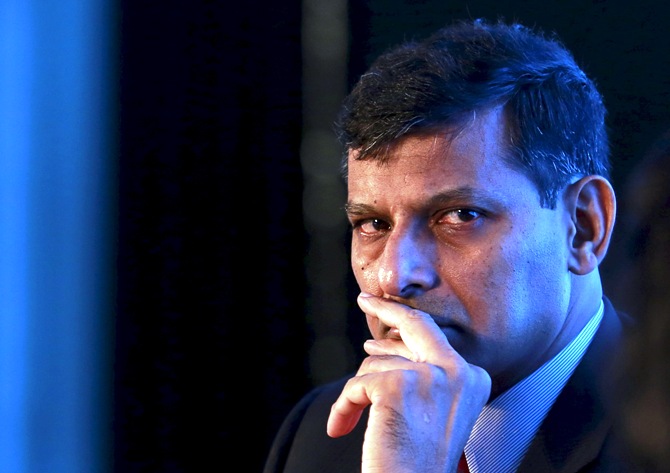
RBI Governor Raghuram Rajan said that consolidated fiscal deficit of the Centre and states rose to 7.2 per cent in 2015 from 7 per cent in the previous year.

The Reserve Bank on Friday retained GDP growth forecast of 7 per cent for 2024-25 financial year, lower than the 7.6 per cent expansion estimated for FY24. In its February monetary policy, the RBI had projected the GDP growth rate of 7 per cent for the financial year beginning April 1. Announcing the current fiscal's first bi-monthly monetary policy, RBI Governor Shaktikanta Das said the rural demand is gathering pace, and sustained growth in manufacturing sector should boost private investment.

Sri Lankan President Anura Kumara Disanayaka assured Prime Minister Narendra Modi that his country's soil will not be used against India's interests, addressing concerns over China's growing influence in Colombo. The two leaders discussed a range of issues, including a defense cooperation agreement, energy ties, and debt restructuring. They also agreed to initiate a ferry service between Rameshwaram and Talaimannar, and to adopt a "humanitarian approach" to the fishermen issue.

The government has budgeted for total expenditure of Rs 34.83 lakh crore or 6.8 per cent of GDP. While the net tax revenue rose from Rs 5,75,697 crore in October 2020 to Rs 10,53,135 crore till October 2021, a growth of 82.93 per cent annualized, total expenditure rose only by 9.95 per cent, led by infra spending to Rs 18,26,725 crore from Rs 16,61,454 crore during the same period, the RBI said in the financial stability report.

Ahead of the Budget, Finance Minister Arun Jaitley on Tuesday underlined the need for tax reforms and quick decision making to ensure stability in policy regime.

Foreign investors have injected close to Rs 33,700 crore in domestic equities in this month so far primarily due to interest rate cut in the US and resilience of the Indian market. This also marks the second highest inflow in a month in this year so far, the last one being in March, when Foreign Portfolio Investors (FPIs) infused Rs 35,100 crore, data with the depositories showed. Going ahead, the trend of FPIs buying is likely to continue in the coming days, V K Vijayakumar, Chief Investment Strategist, Geojit Financial Services, said.

'In the new coalition government, India's reform agenda may prioritise job creation and factor market reforms.'
The challenge for the RBI in 2024 is likely to be less about containing elevated inflation and more about curbing excessive financial market exuberance and a 'problem of plenty', notes Sajjid Chinoy, Chief India Economist JP Morgan.

The Survey is authored by Chief Economic Advisor V Anantha Nageswaran and his team.
The government has utilised 'escape clause' under the FRBM Act which provides it leeway for relaxation of fiscal deficit roadmap during time of stress.

A panel has recommended that the RBI should bring down CPI inflation to 4 per cent.
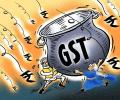
GST collections in July rose 10.3 per cent to over Rs 1.82 lakh crore, mainly driven by domestic transactions in goods and services, according to official data released on Thursday. This is the third-highest-ever monthly collection recorded since the indirect tax regime was rolled out 7 years ago on July 1, 2017. According to the data, total refunds stood at Rs 16,283 crore in July.
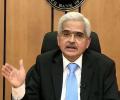
The Reserve Bank of India on Wednesday decided to keep the policy rate unchanged for the tenth time in a row but changed its stance to 'neutral' that may lead to a cut in the forthcoming policies. RBI maintained status quo despite the US Federal Reserve lowering the benchmark rates by 50 basis points last month.

The BSE mid-cap and small-cap stocks have outperformed the benchmark Sensex in 2023-24 with about 62 per cent returns, reflecting buoyant investors' sentiment amid robust macroeconomic conditions in the country and impressive quarterly earnings reported by various firms. As per an analysis, the BSE mid-cap gauge jumped 15,013.95 points or 62.38 per cent in the 2023-24 fiscal, while the small-cap index climbed 16,068.99 points or 59.60 per cent. In comparison, the 30-share BSE Sensex raked in a gain of 14,659.83 points or 24.85 per cent during the fiscal under review.
